by photojournalist Jeffrey Moellering
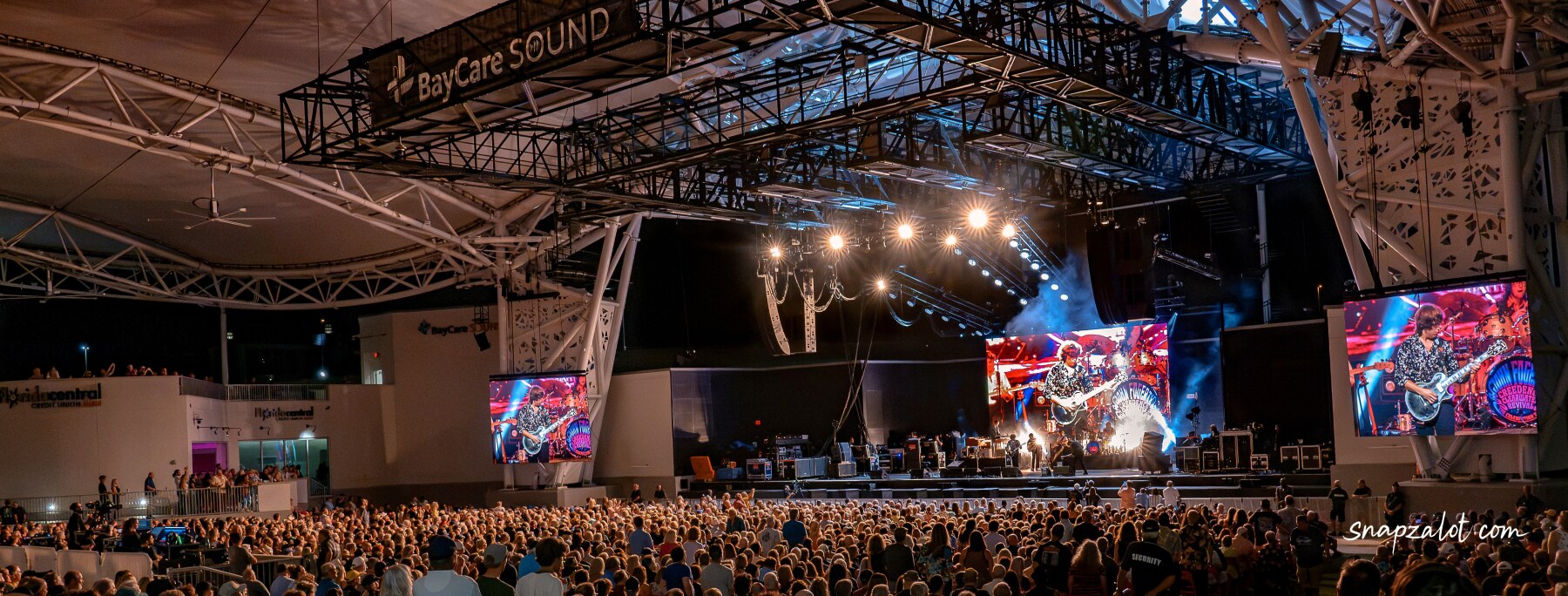
Some concerts lean heavily on nostalgia, content to rely on old memories and collect polite applause. The Steve Winwood and John Fogerty show at The BayCare Sound in Clearwater on September 19 showed why these two legends remain key figures in the history of rock music, and not simply another turn of the radio dial to an oldies station.
Before a completely full house Saturday night, with fans packed onto the hillsides, Winwood and Fogerty showed that great rock ’n’ roll does not simply survive the decades but continues to inform and inspire. Sharing the bill for a formidable night of music, the two Rock and Roll Hall of Famers drew from catalogs spanning the Spencer Davis Group, Traffic, Blind Faith, Creedence Clearwater Revival, and their acclaimed solo careers. Far from a tour through a dusty musical museum, the evening became a roadmap leading to the heart of rock’s enduring inspirations.
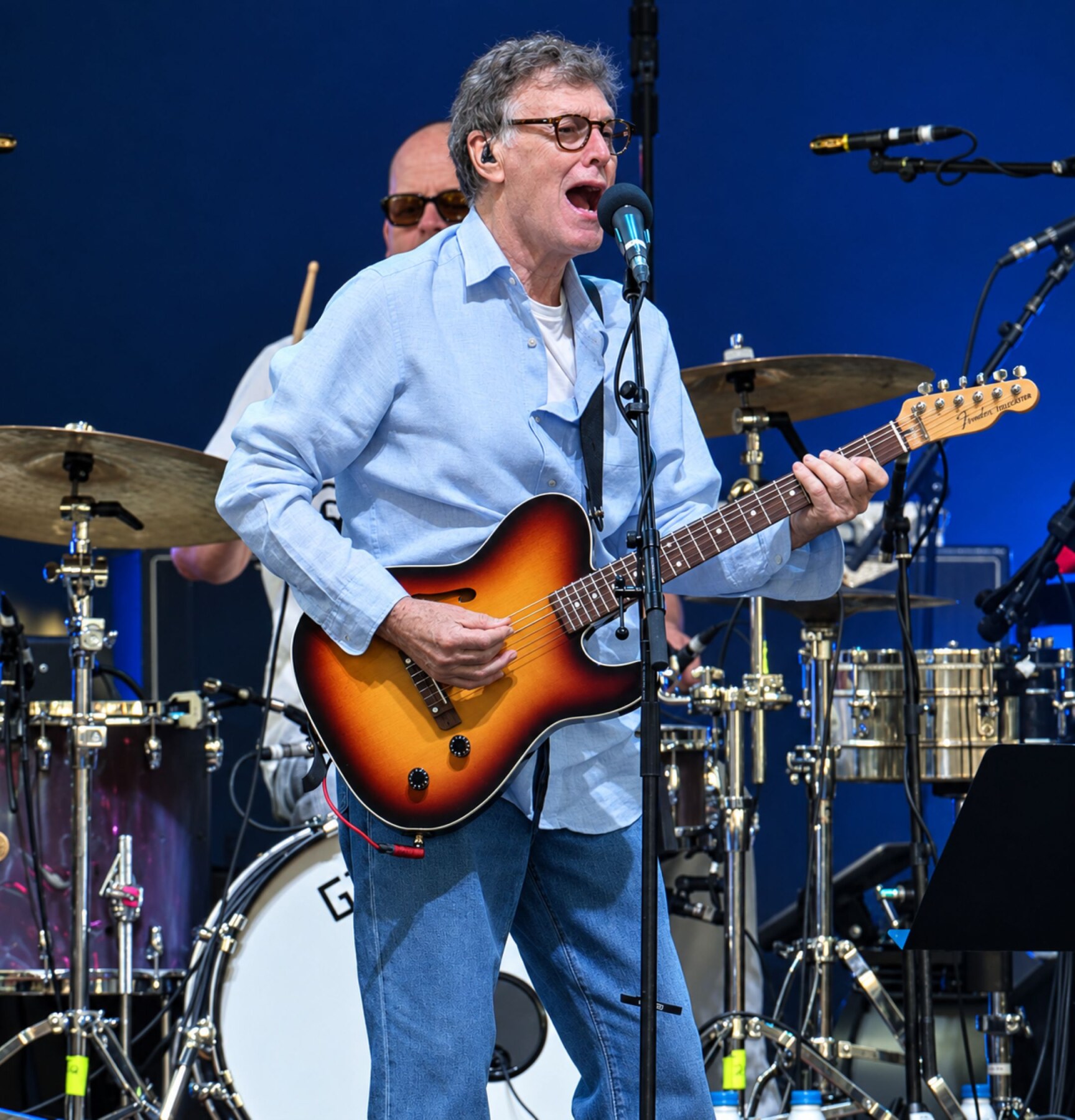
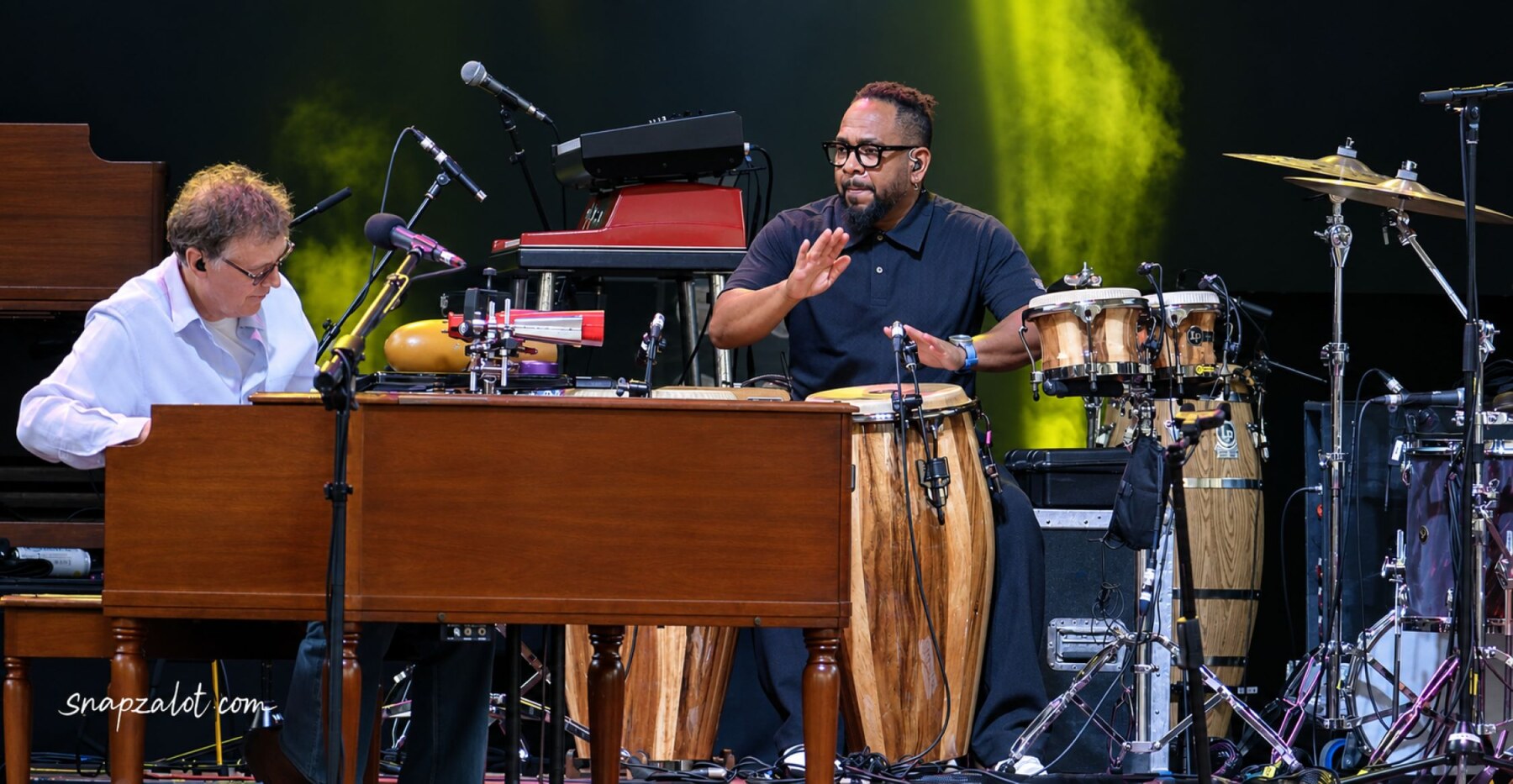
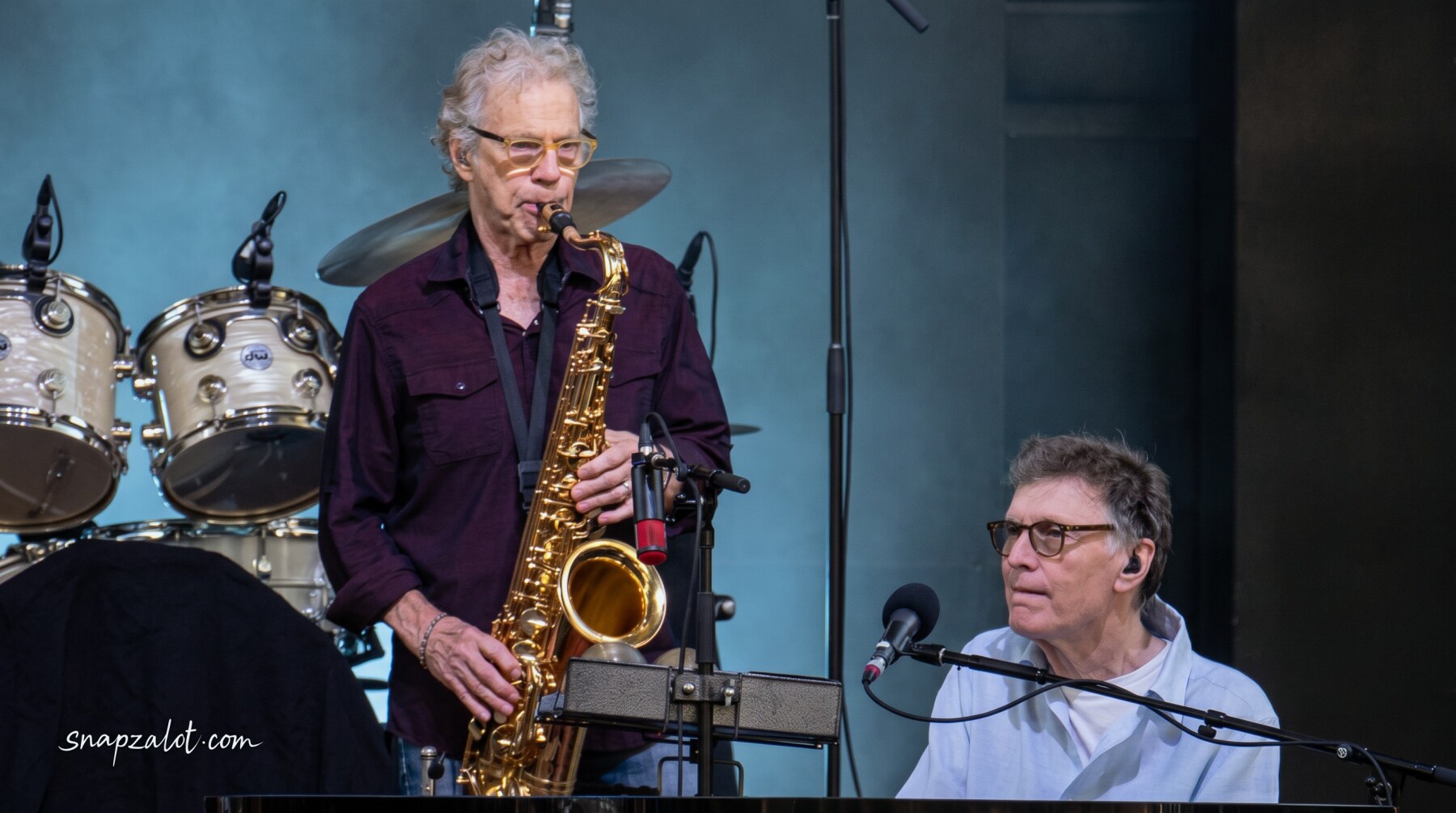
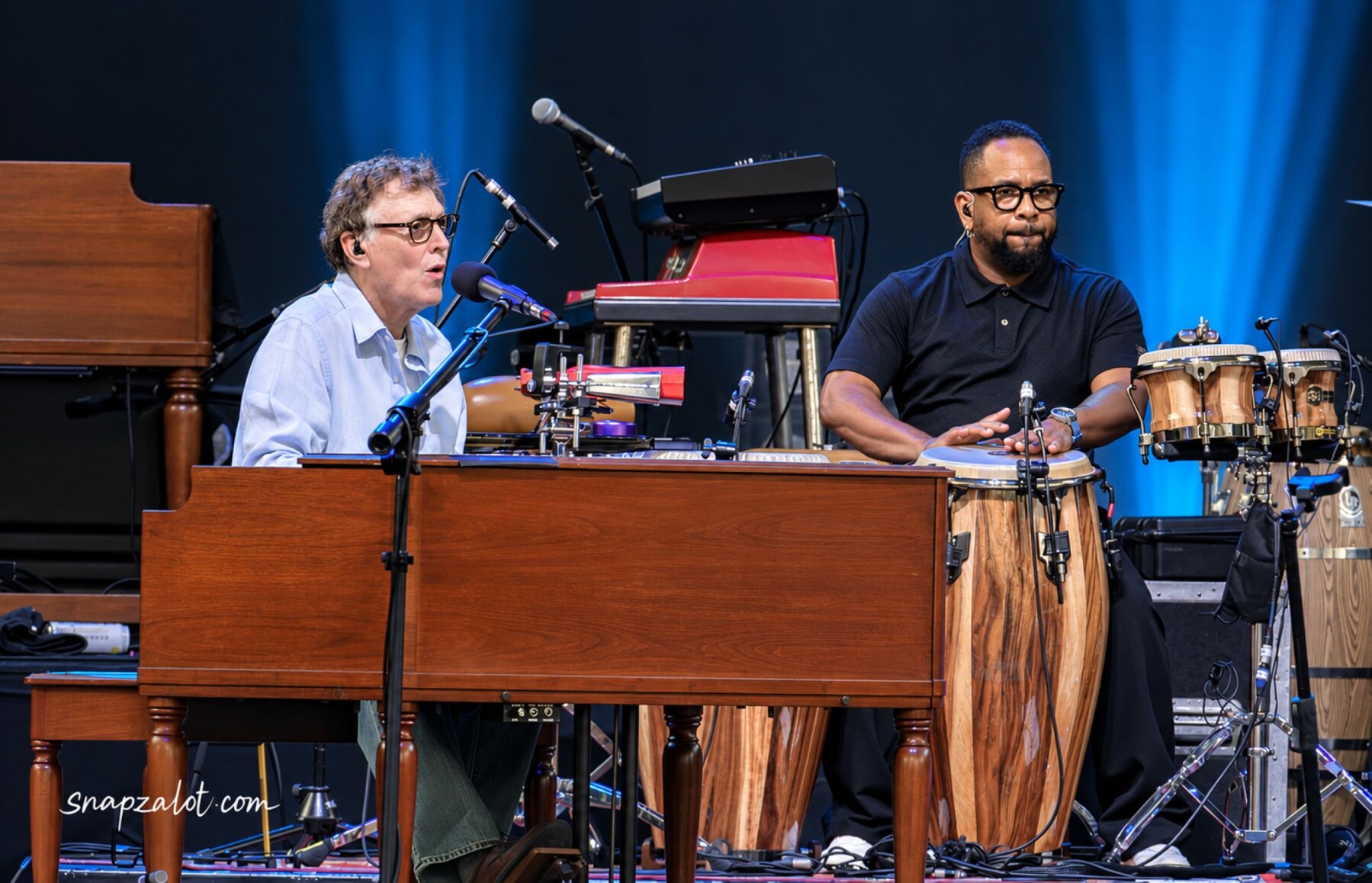
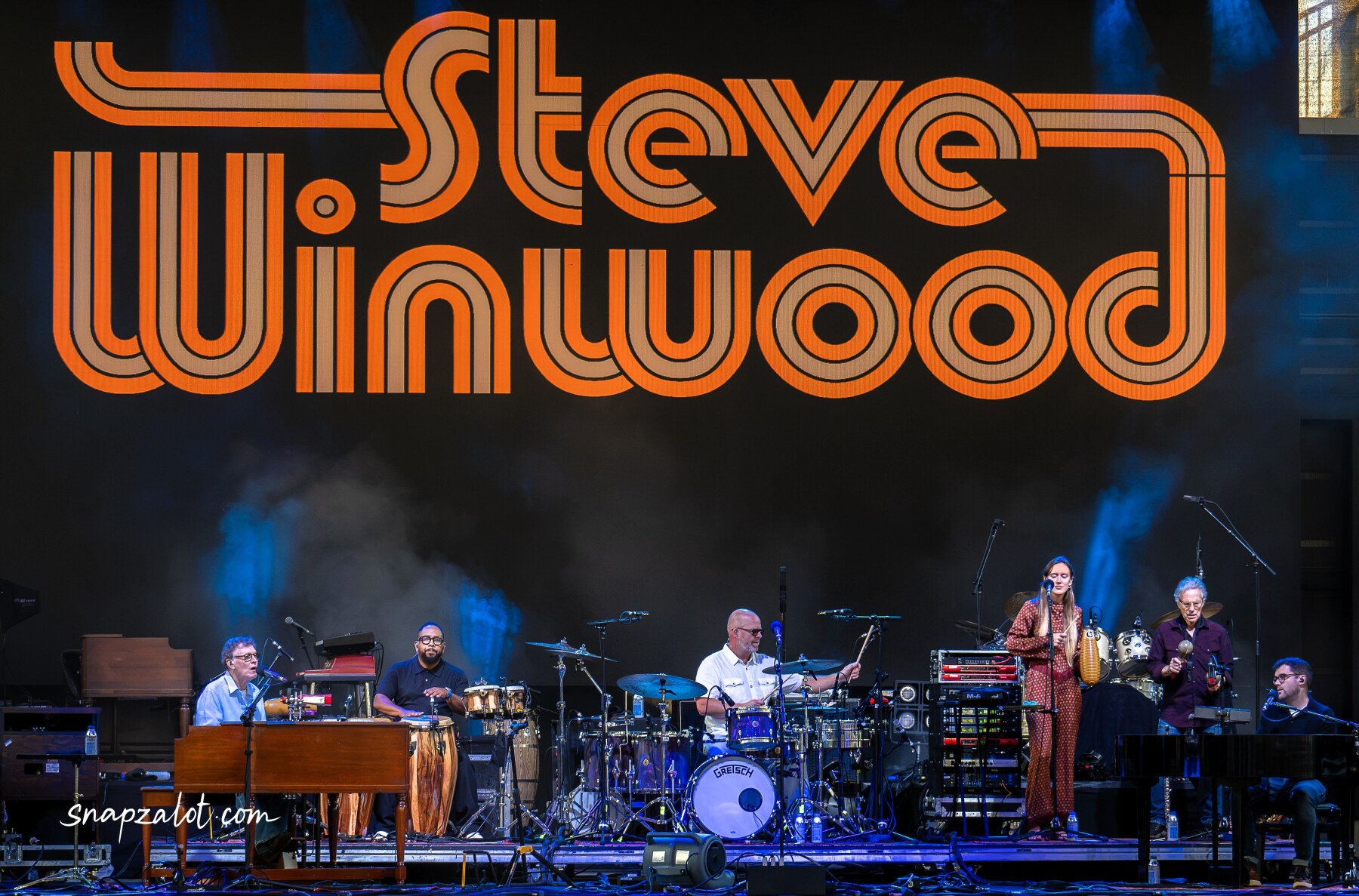
Winwood opened the show with Traffic’s “Glad,” its cascading keyboards and rich, jazz-inflected grooves immediately establishing the sophisticated musicianship that has defined his career. At 78, Winwood’s voice remained remarkably soulful and expressive, while his versatility as a multi-instrumentalist was on full display as he moved effortlessly between keyboards and guitar.
His set unfolded like a carefully curated journey through more than six decades of music. The haunting beauty of “Can’t Find My Way Home” gave way to the churning rhythm of “I’m a Man,” while “Forty Thousand Headmen” cast its hypnotic spell before the expansive “Dear Mr. Fantasy” allowed Winwood and his band to stretch out and explore the song’s psychedelic meanderings.
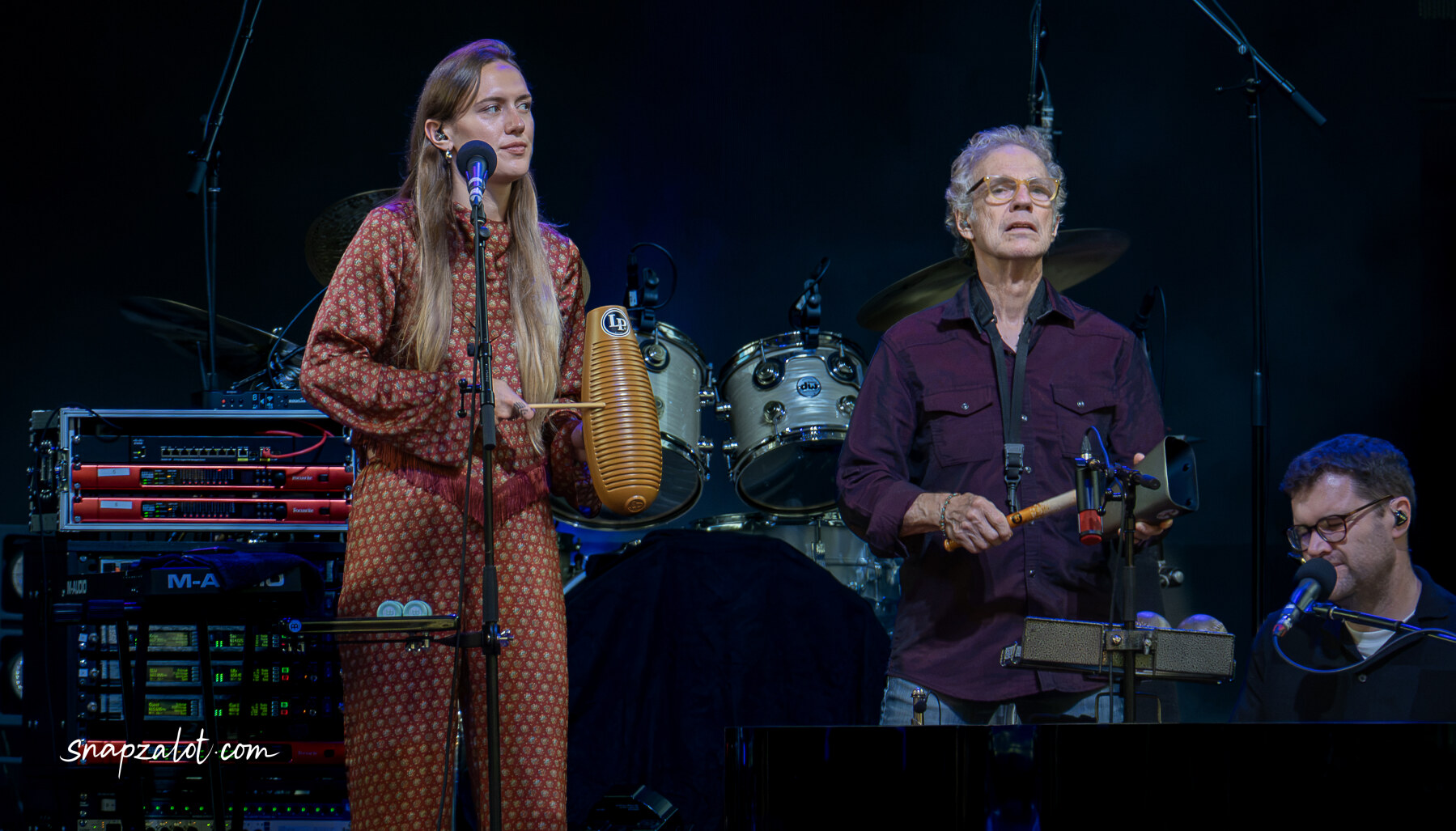
In addition to his keyboard skills and signature vocals, Winwood remains a fine guitarist. “Can’t Find My Way Home” always puts me in a hypnotic trance, speaking to that deeply personal journey we all take in search of meaning and purpose in life. Accompanying Winwood was his daughter Lily on backing vocals and percussion, helping fill out some of the higher-register notes associated with her father’s younger voice.
Those deeper cuts were balanced by the polished solo hits that introduced Winwood to an entirely new generation during his successful 1980s solo career. “Roll With It” carried an irresistible groove, “Back in the High Life Again” brought a warm rush of recognition, and “Higher Love” soared with the same exuberance that made it one of the defining songs of his solo career.
By the time “Gimme Some Lovin’” crackled through the venue, the crowd was on its feet and in full dance mode, putting everyone in a genuinely feel-good state of mind. It was a fitting conclusion to a performance that blended refinement with genuine soul, reinforcing Winwood’s reputation as a musician’s musician, whose work rewards careful listening while still possessing the power to move an amphitheater crowd.
I would greatly welcome a solo Winwood tour that would give him time to explore his remarkable catalog in greater depth, but witnessing such an icon perform at this level is always a wonderful experience.
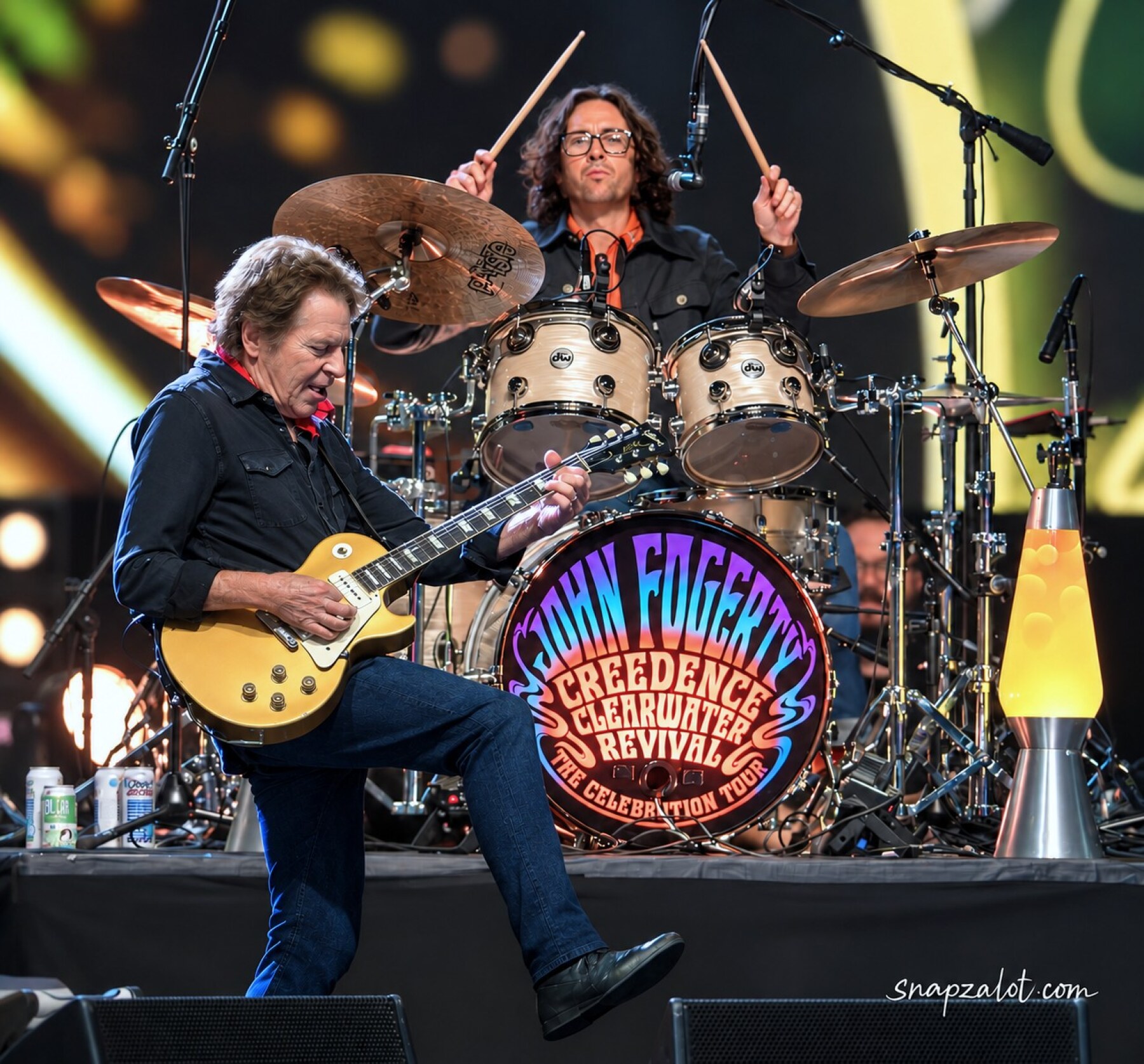
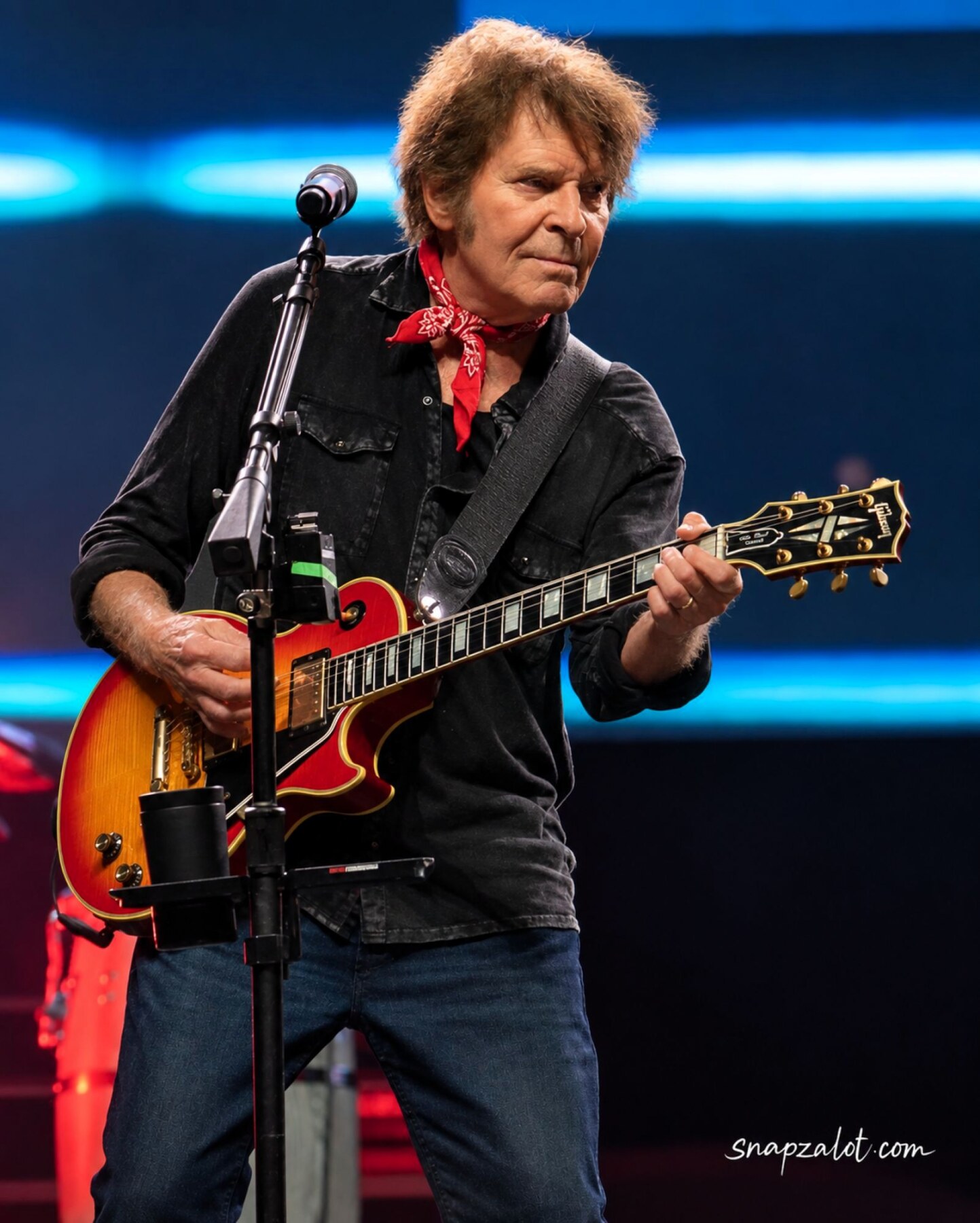
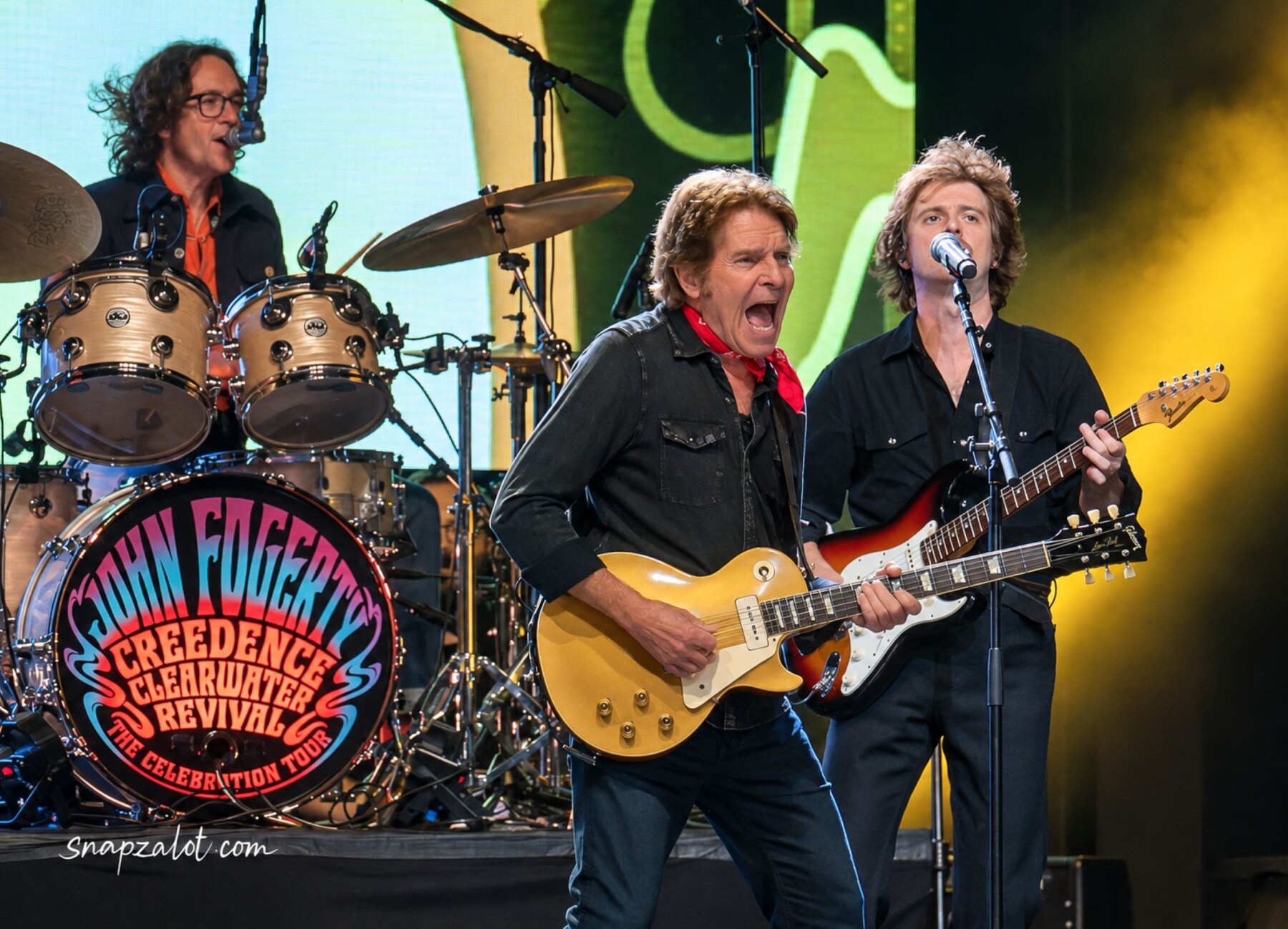
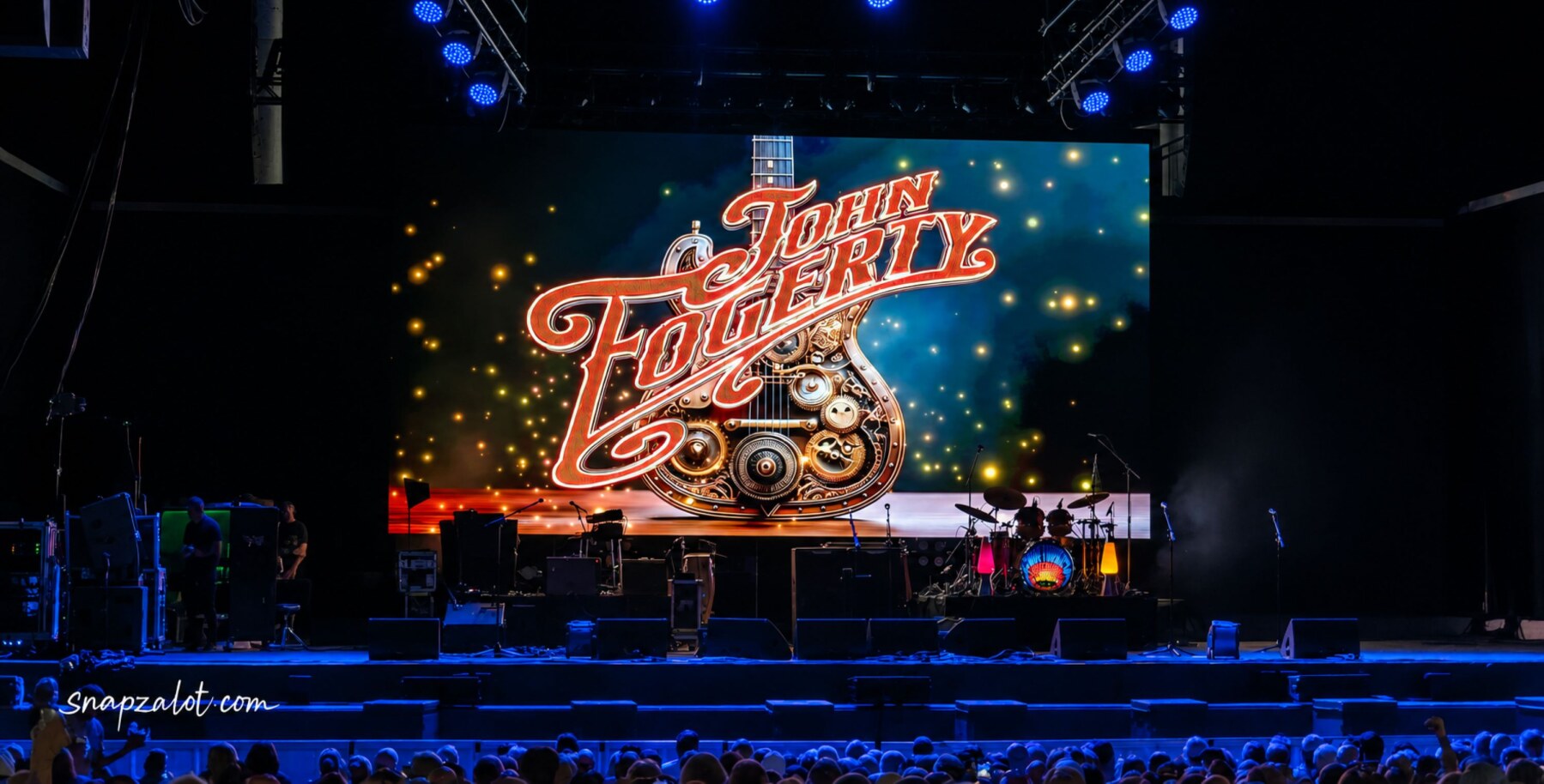
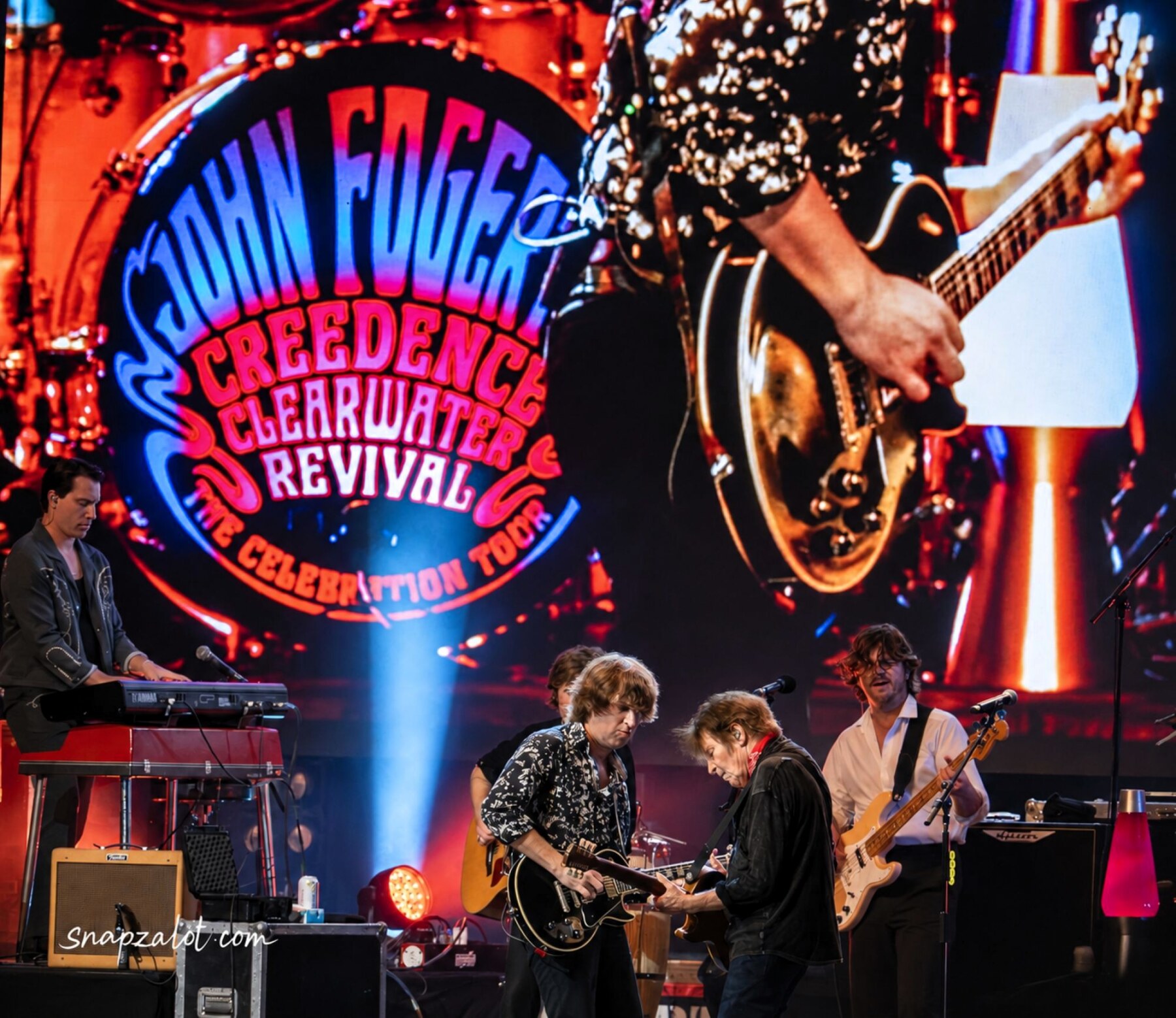
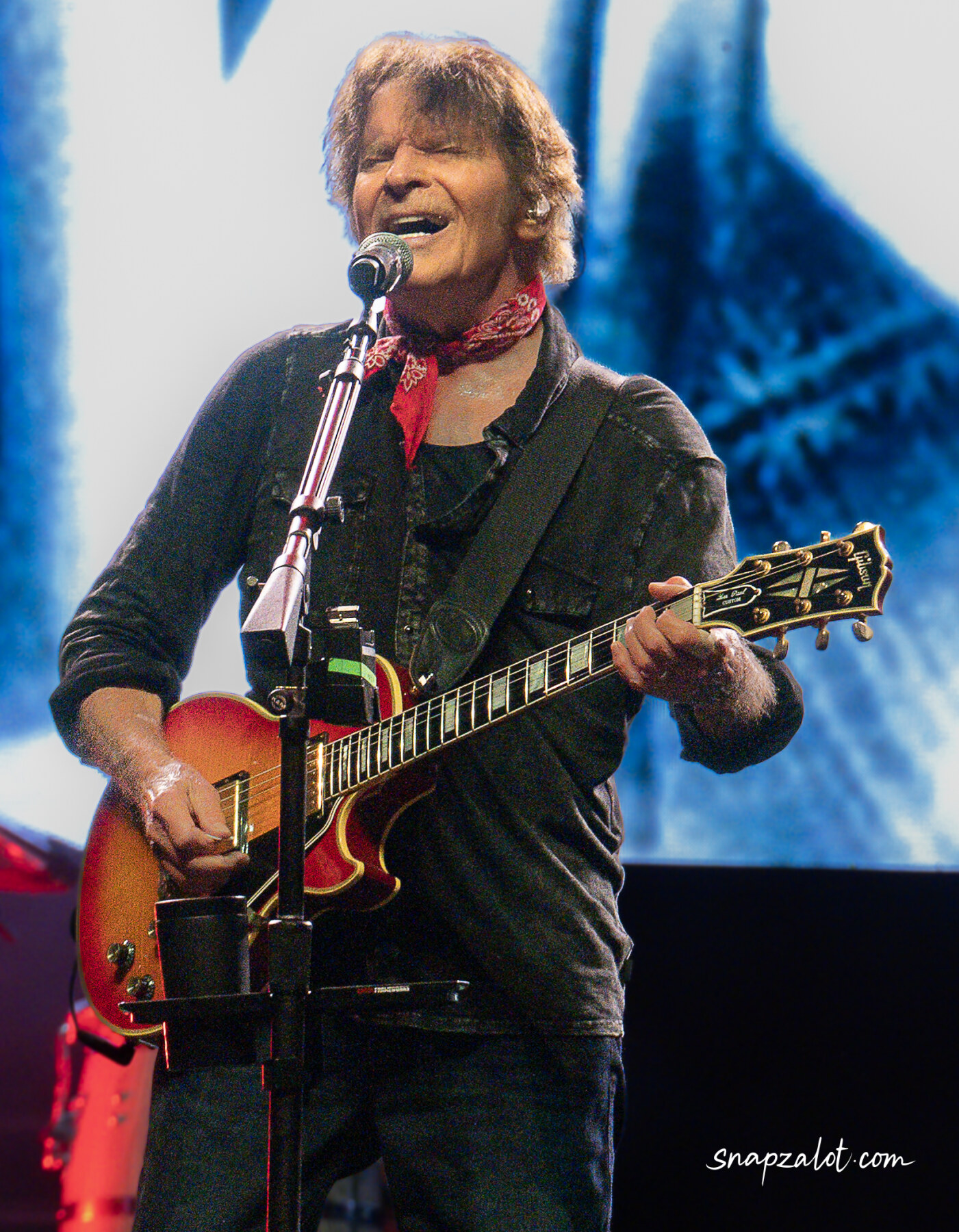
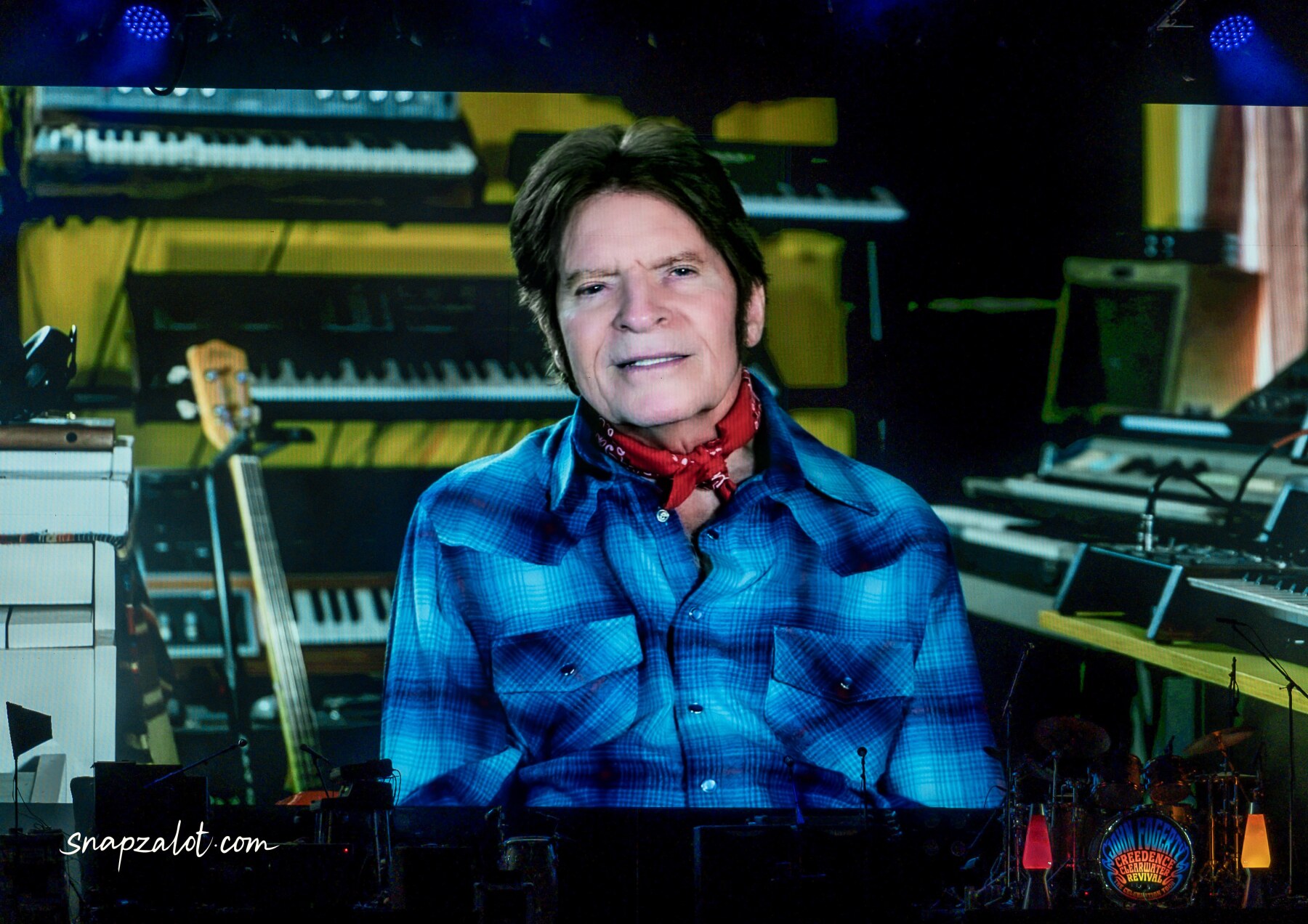
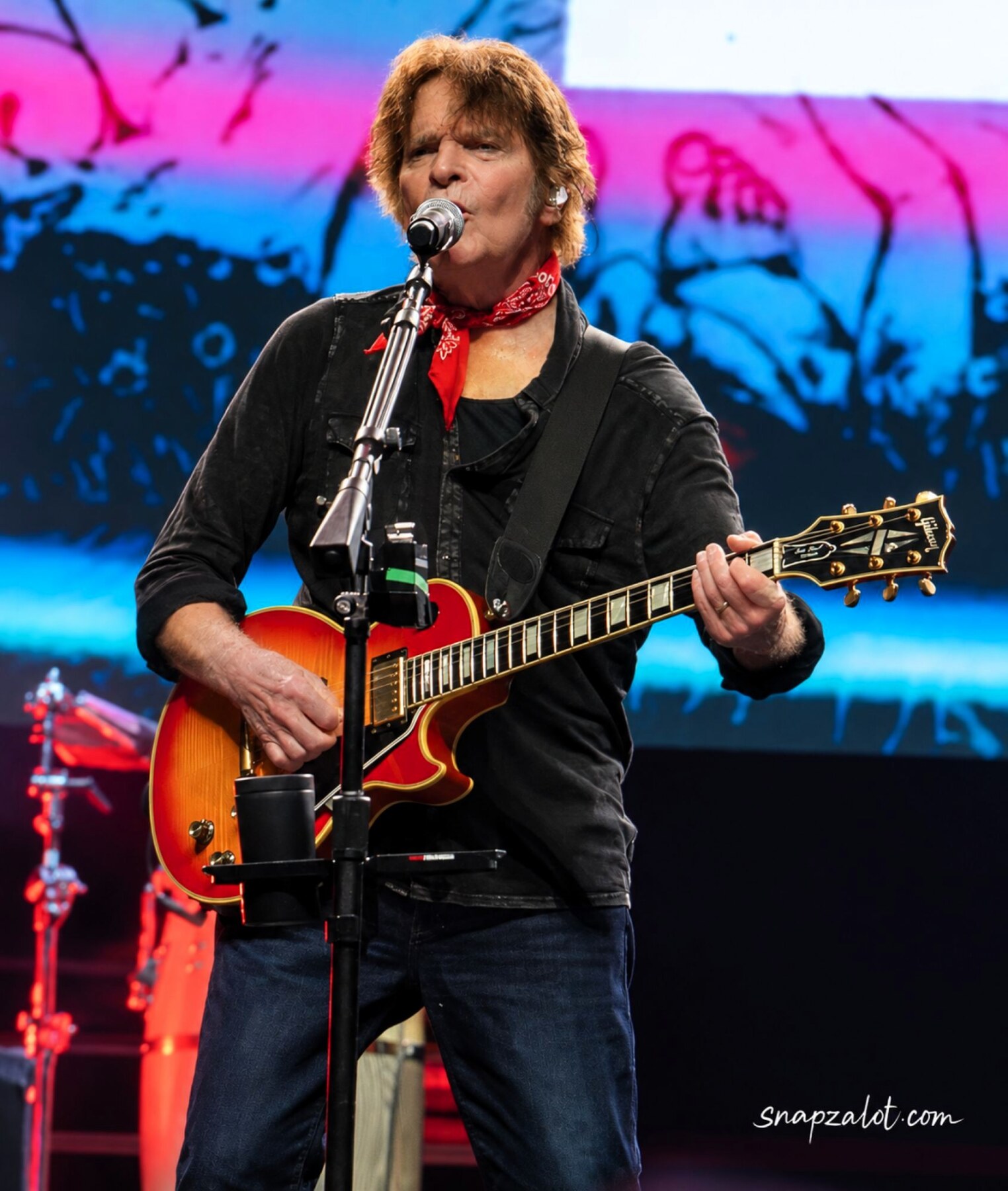
If Winwood brought sophistication and subtlety, Fogerty charged in as the boy born on the bayou, ready to set the place alight. The set began with a video intro explaining how, after a decades-long fight, he had finally won back the rights to the songs he wrote. Indeed, he seemed like a man freed from chains, with years of pent-up energy suddenly ready to be unleashed.
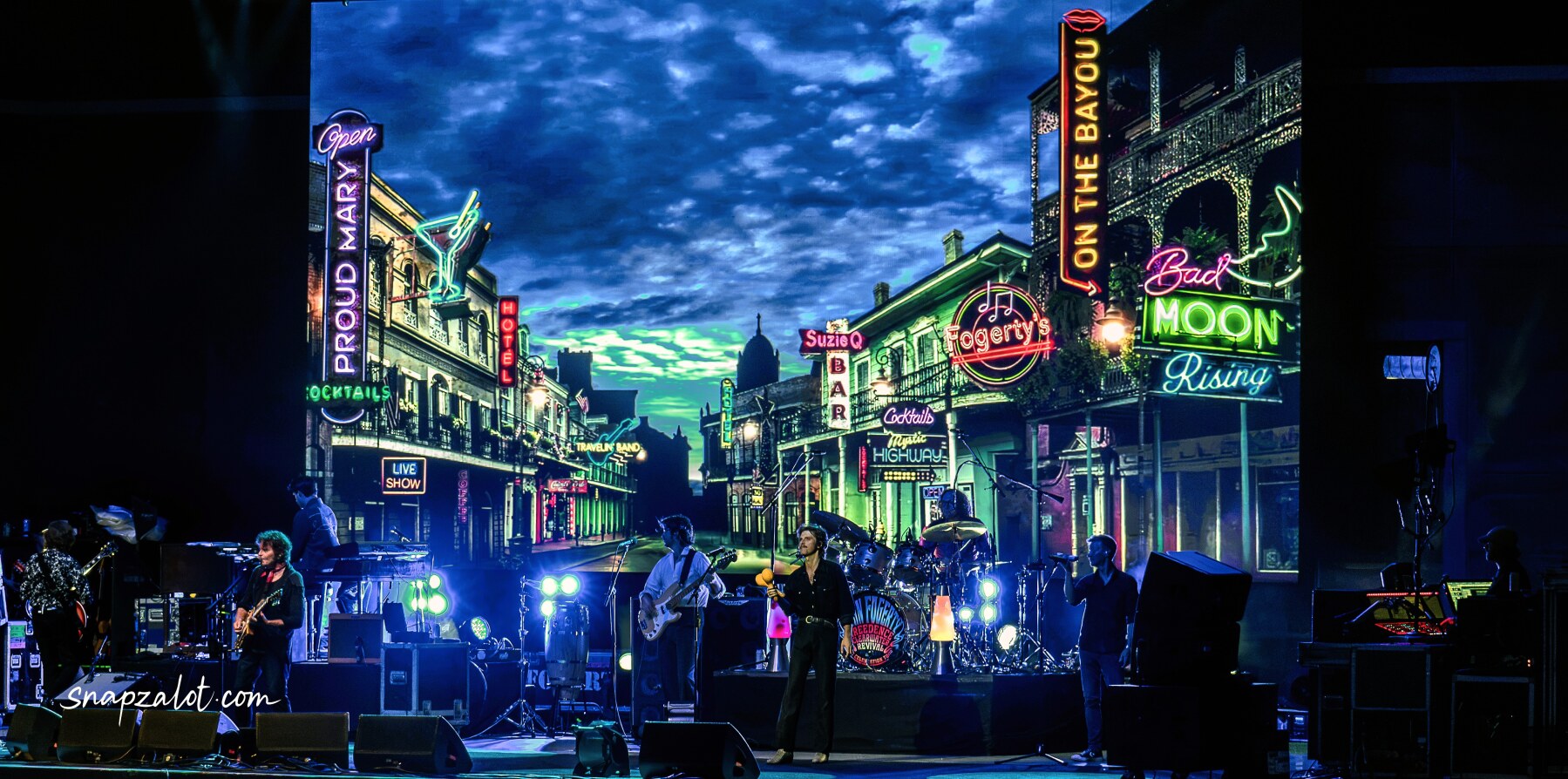
He wasted no time, surging into “Bad Moon Rising” as thousands of voices immediately joined him. From that moment onward, there was little chance of the infectious energy letting up. “Up Around the Bend,” “Green River,” and the swampy churn of “Born on the Bayou” followed, each revealing the elemental simplicity and bite that have made Creedence Clearwater Revival songs fixtures of American rock.
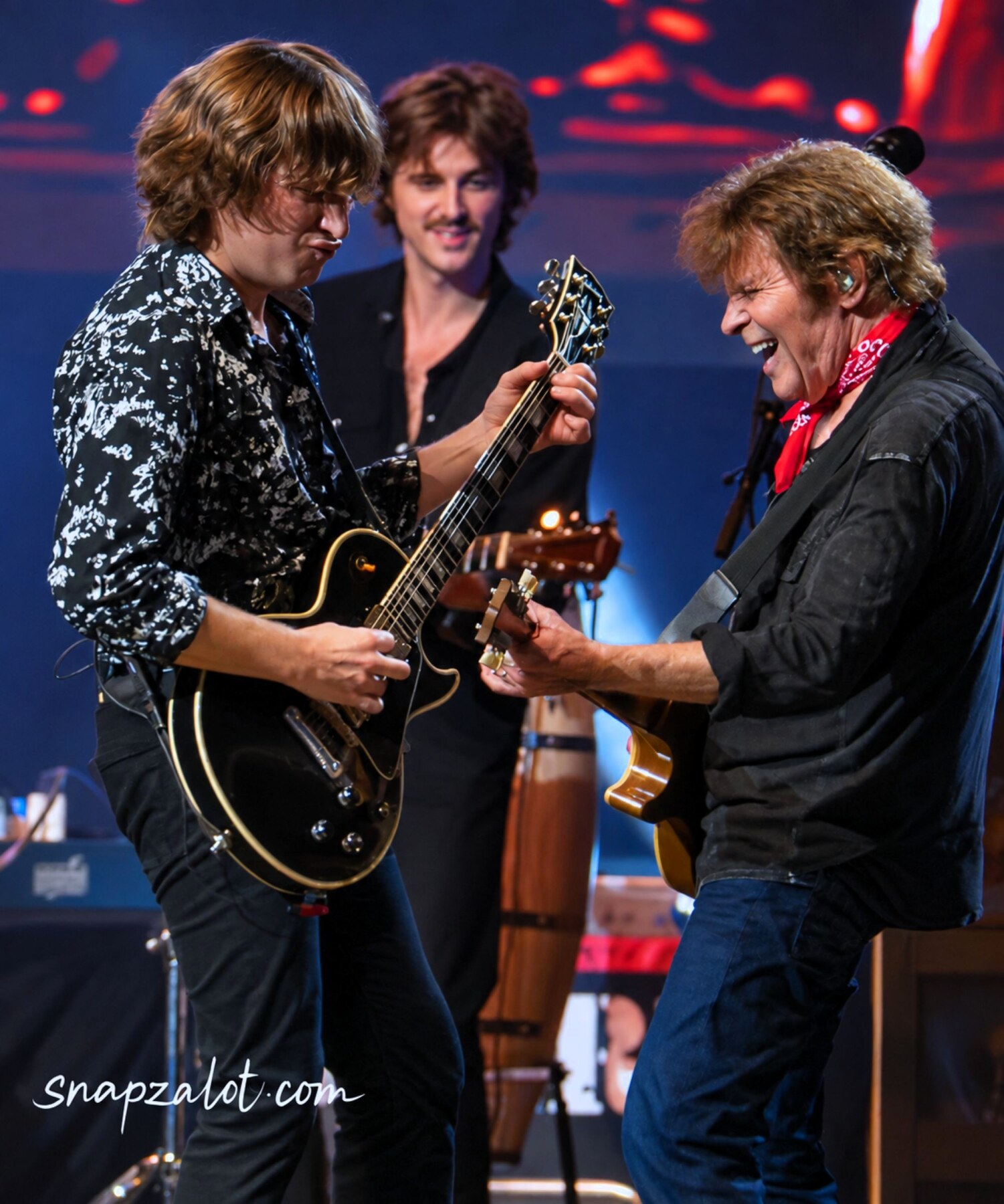
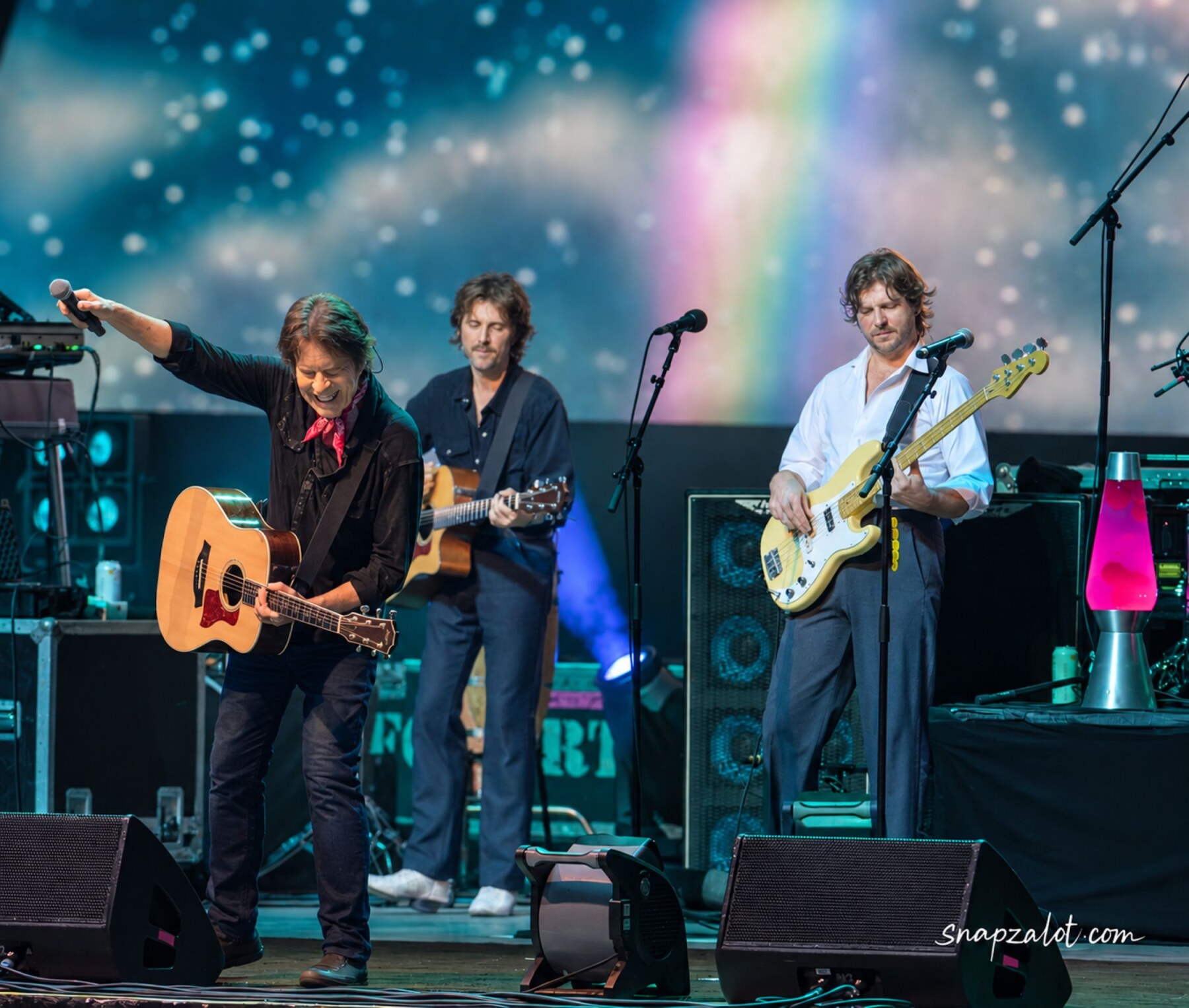
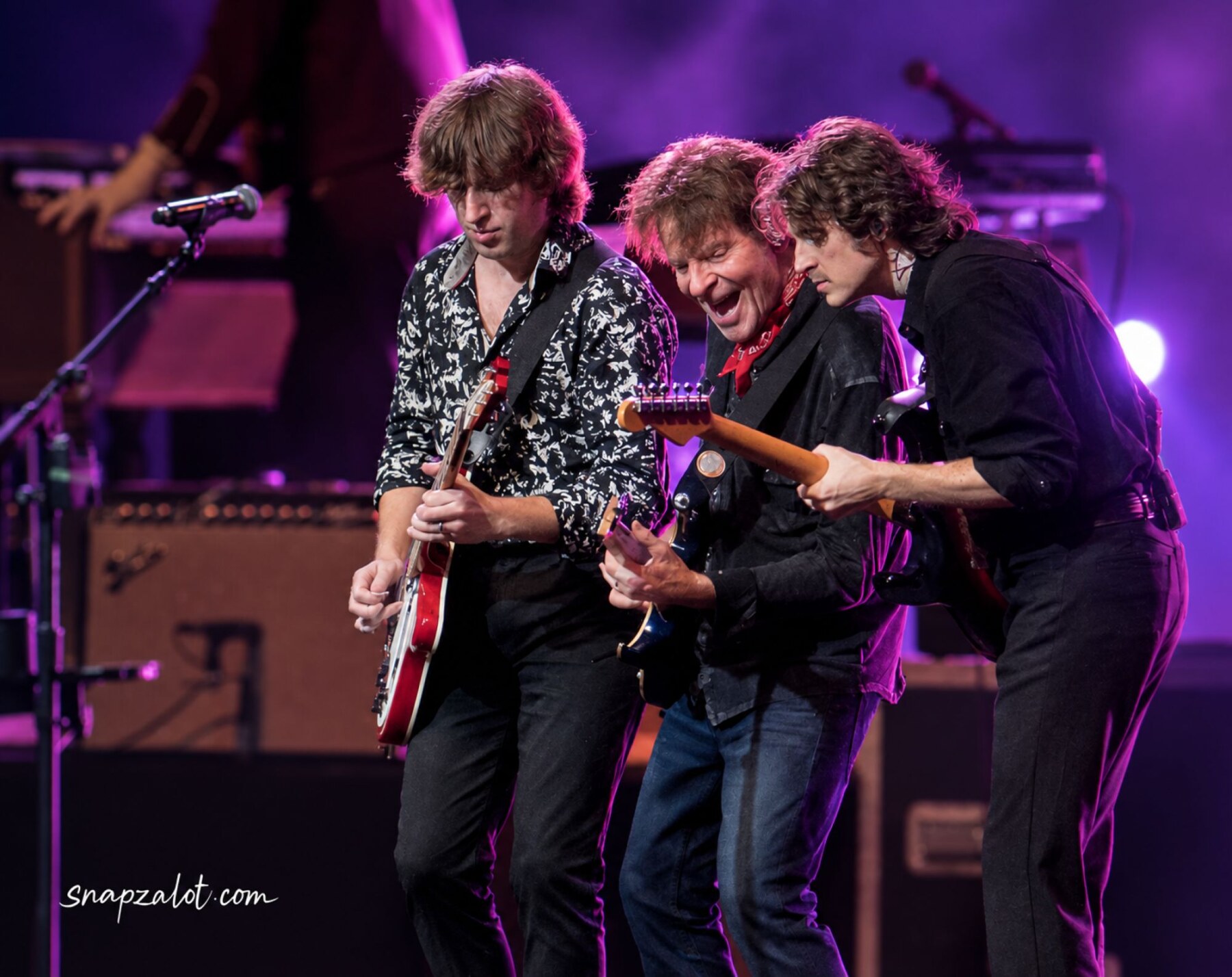
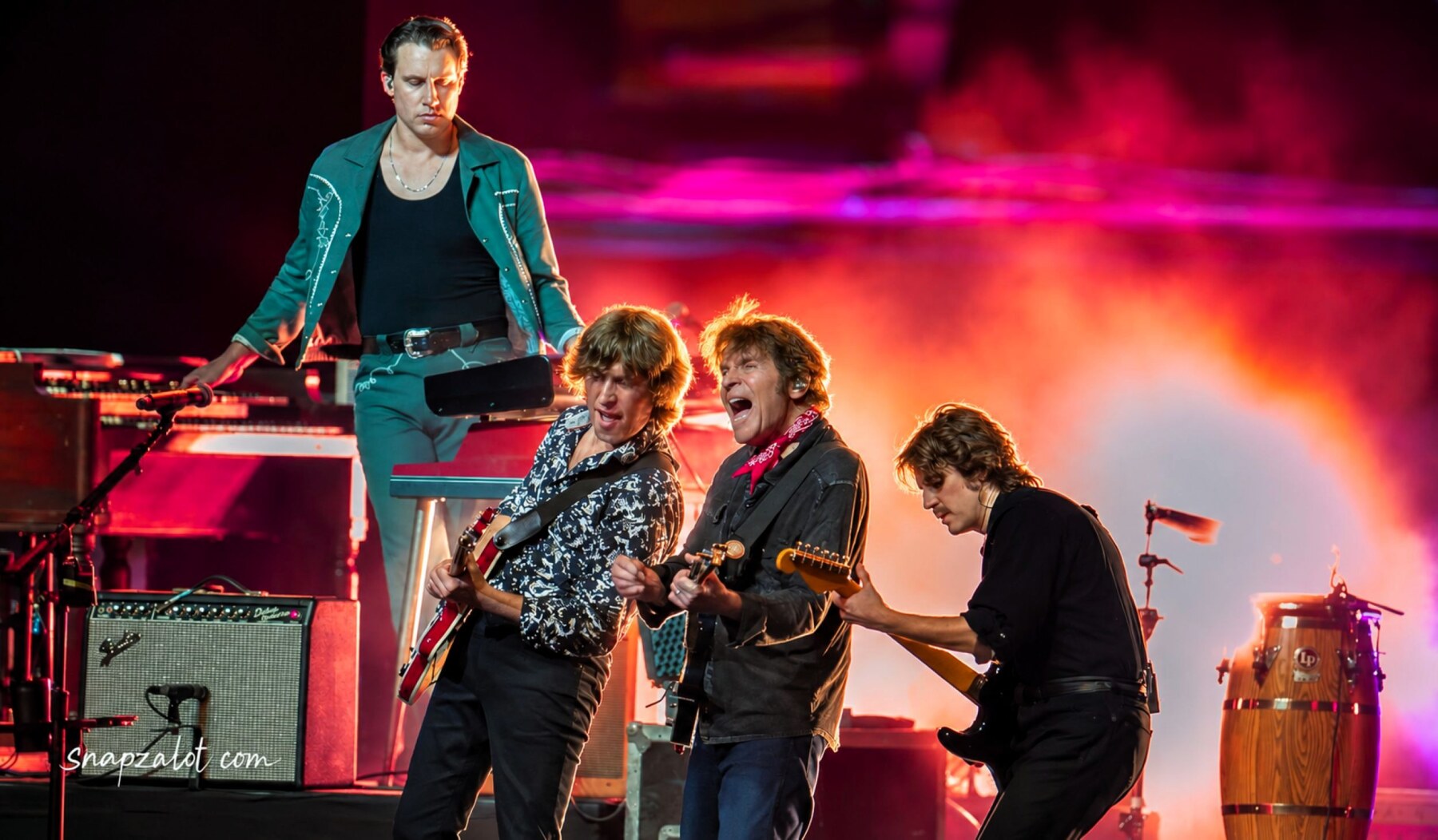
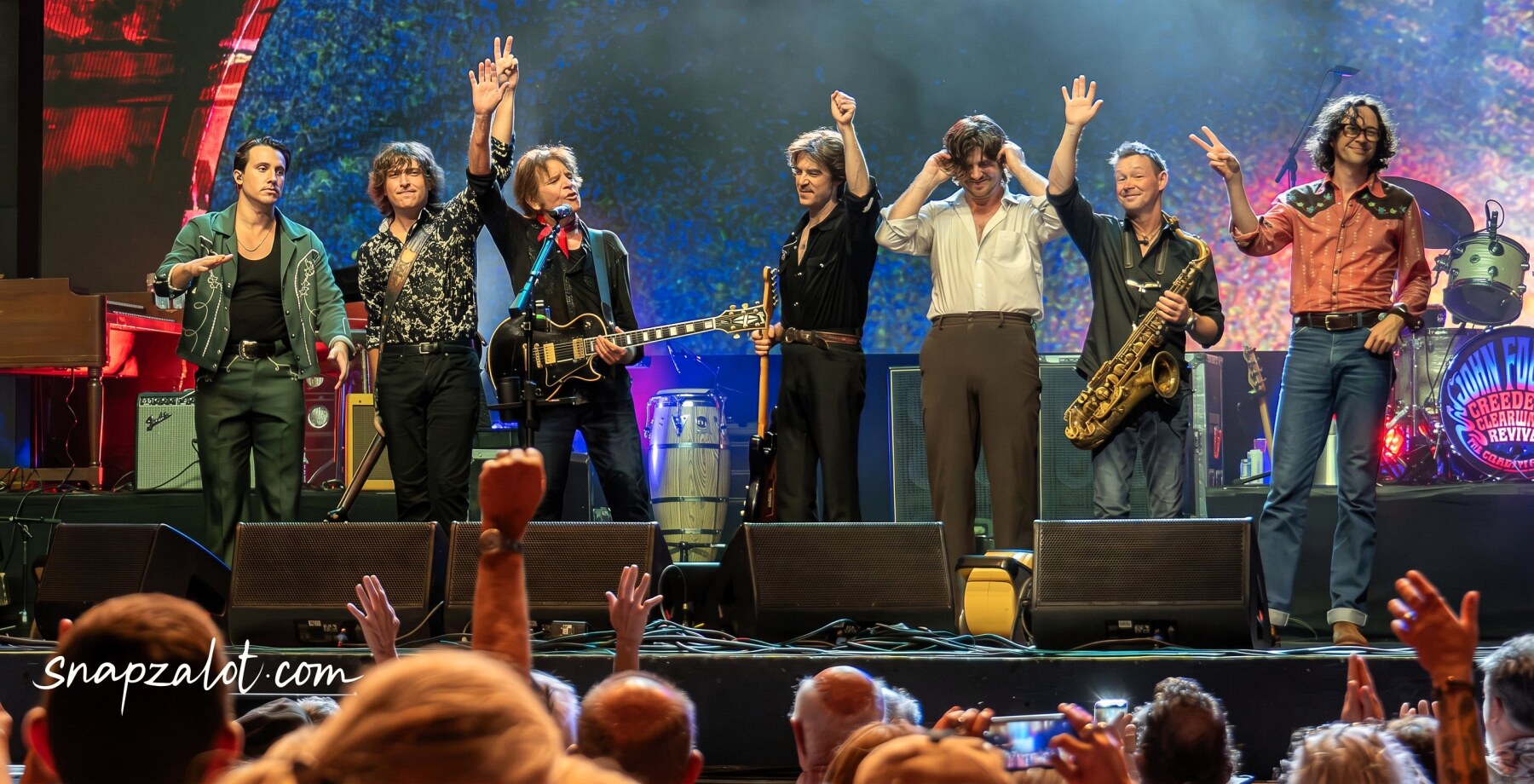
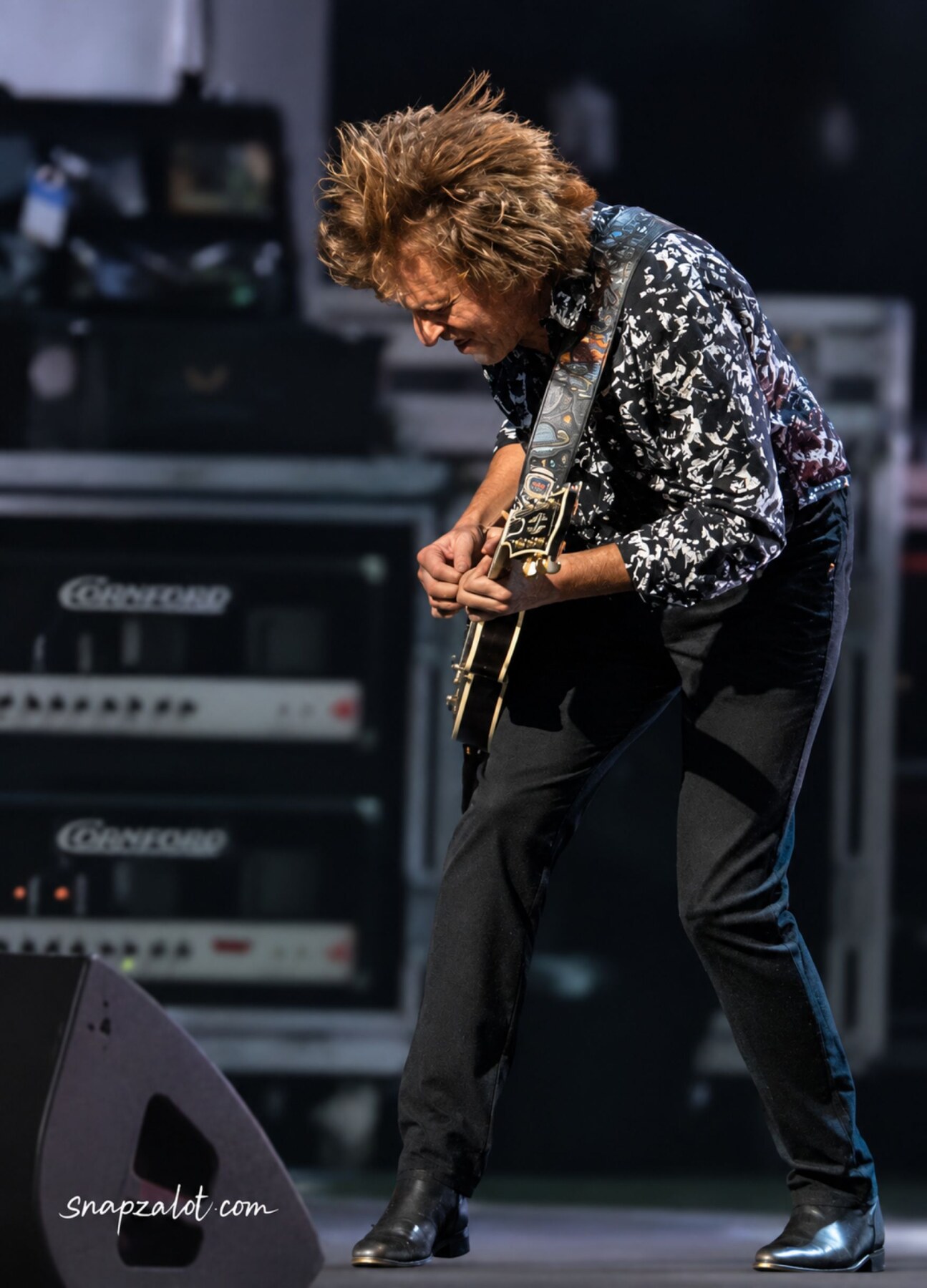
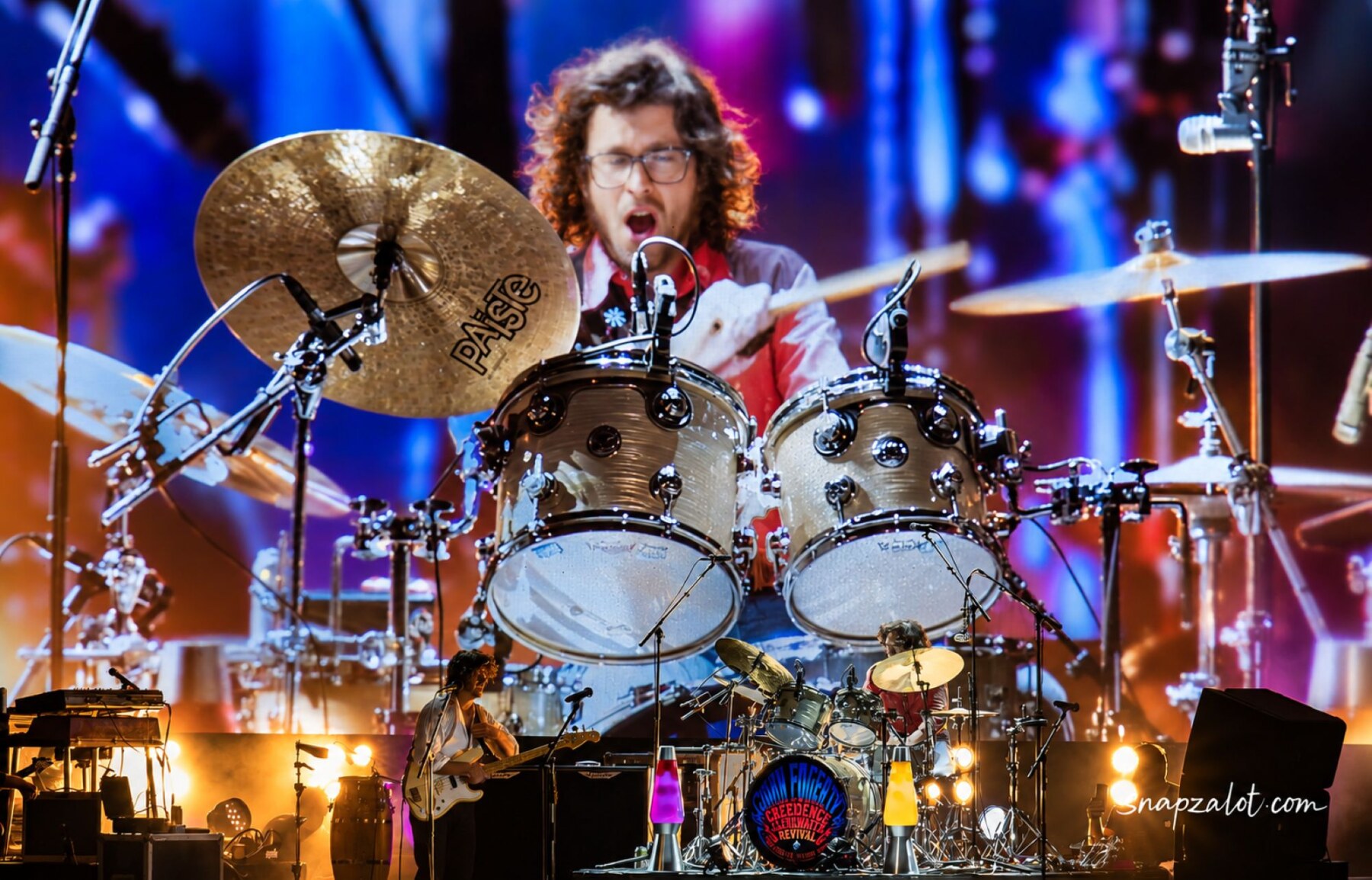
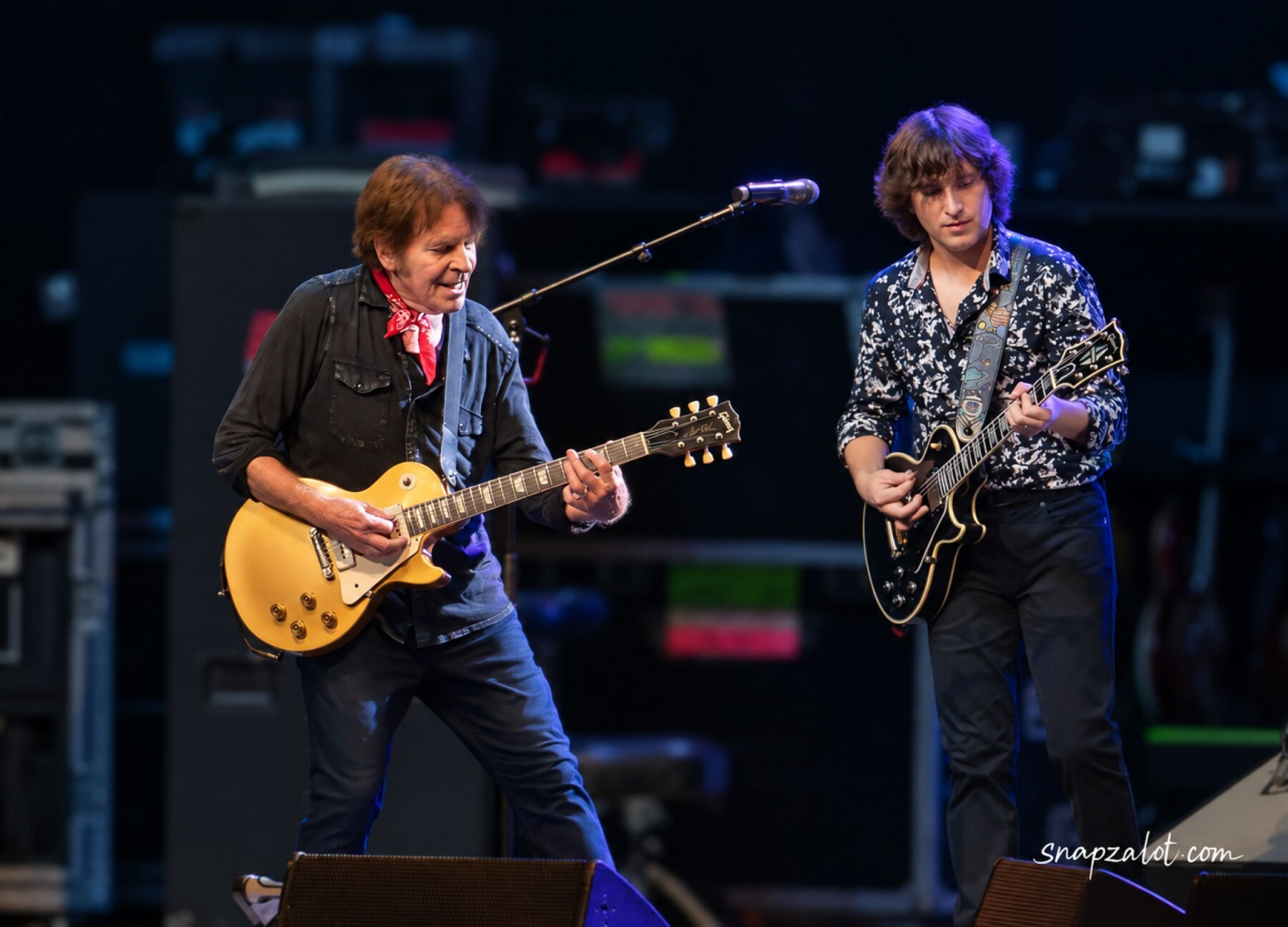
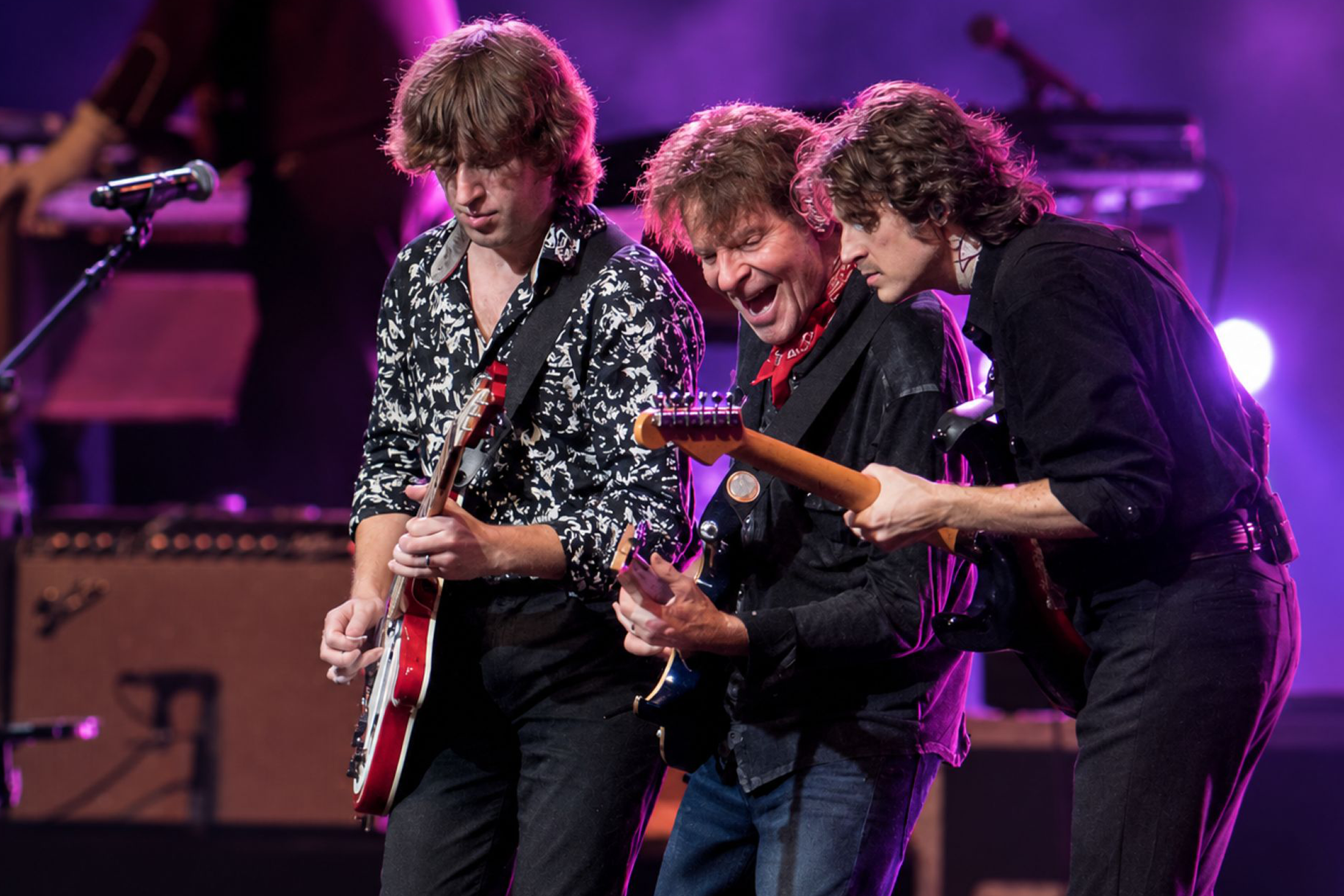
Making the evening all the more memorable, Fogerty’s sons Shane and Tyler shared the stage with their famous father, and both proved to be crack guitarists in their own right. The seven-piece band was an absolute powerhouse, turning classic CCR songs normally associated with a standard four-man attack into a thunderous swamp-rock bulldozer, with a fire and fury that gave the songs a renewed sense of urgency.
Fogerty packed an astonishing amount of music into a sharp 90-plus-minute set, with virtually no wasted motion. “Who’ll Stop the Rain” inspired another massive singalong, while the playful bounce of “Lookin’ Out My Back Door” contrasted with the darker menace of “Run Through the Jungle.” A sprawling “Ramble Tamble” gave Fogerty and his band room to dig into one of the grittier corners of the CCR catalog, while “Have You Ever Seen the Rain?” turned the amphitheater into a choir. Then, right on cue, as if Clearwater itself wanted in on the revival, drops began falling from the sky.
While Fogerty built his reputation on compact three-minute songs that delivered their message with remarkable efficiency, he seemed determined to remind the crowd that there is much more to his musicianship. Several songs expanded into extended guitar workouts, with Fogerty moving across multiple instruments, even unleashing some Eddie Van Halen-style tapping before trading blistering exchanges with his sons. He raced around the stage and incited the crowd with the abandon of someone playing Woodstock rather than an amphitheater in 2026.
At 81, the man’s energy could pass for someone decades younger. Fogerty continues to put the work into his guitar playing, and he appears to have the drive and determination to forge the ending to a career that was denied to him for far too many years. He’s truly making up for lost time.
Amid the many classics, “Joy of My Life” provided a welcome change of pace. Tender and heartfelt, the song offered a moment of intimacy as Fogerty spoke about his wife of 35 years, seated stageside during the show, before shifting back into a higher gear.
His post-CCR career was represented by two of its biggest standouts. “The Old Man Down the Road” retained its sinister, swamp-rock bite, while “Centerfield” landed like a celebration, its instantly recognizable opening guitar ringing through the venue before the song barreled forward with infectious enthusiasm. For the occasion, Fogerty strapped on his unmistakable baseball bat-shaped guitar, a visual treat that drew an enthusiastic response from the crowd.
Then came “Fortunate Son.”
More than half a century after its release, the song still carried a remarkable sense of confrontation and defiance. Fogerty attacked it rather than merely performing it, and an already animated crowd responded in kind.
For the encore, there was no easing toward the finish line. “Travelin’ Band” exploded out of the gate before “Proud Mary” brought the evening to a triumphant close, leaving the crowd spilling out into the Clearwater night still singing its famous refrain.
What ultimately made the pairing so effective was how differently Winwood and Fogerty approached the same basic mission.
Winwood offered soulful sophistication, musical dexterity, and the graceful confidence of an artist who has spent a lifetime exploring the spaces between rock, blues, R&B, jazz, and psychedelia. Fogerty countered with raw swagger, muscular rhythms, piercing guitar, and a seemingly bottomless collection of concise American rock anthems.
One dazzled through nuance. The other hit with blunt-force immediacy.
Together, Steve Winwood and John Fogerty delivered far more than a double bill built around familiar songs. They brought the living storybook of rock ’n’ roll to life, performed not as forgotten trophies gathering dust on a shelf from another era, but as music still capable of shaking a Clearwater amphitheater decades after it was written.
On this night in Clearwater, nostalgia provided the invitation, while the songs delivered the living legacy. And with any luck, the old man down the road will find his way back to Clearwater for another revival.